
Who is This For?
BFR is ideal for people who:
-
Recently had surgery or a significant injury and need a safe way to maintain or rebuild muscle
-
Have load-sensitive pain (joint, tendon, acute injury, or post-operative) that limits traditional heavy lifting
-
Are trying to prevent muscle loss during periods of reduced activity or limited mobility
-
Want to target specific muscle groups while also benefiting from the broader systemic effects of BFR
-
Are looking to accelerate rehab and improve muscle activation without overloading healing tissues

_edited.jpg)
Is BFR Right for You?
BFR is not appropriate for everyone. This approach may not be safe for individuals with:
-
Vascular issues or compromise
-
Clotting disorders or a history of blood clots
-
Uncontrolled hypertension or serioud cardiovascular disease
-
Certain surgical precautions where blood flow restriction is contraindicated
If you are unsure whether BFR is safe in your situation — we will discuss your medical history and, if needed, coordinate with your doctor or surgeon before starting.
Socials
Confident Bodies Start from the Inside Out.
More than Kegels. More than postpartum. We talk all things pelvic floor—from birth prep to bladder leaks, painful sex, and beyond. Follow for expert advice, empowering tools, and movement-based support!
FAQs about Blood Flow Restriction Training
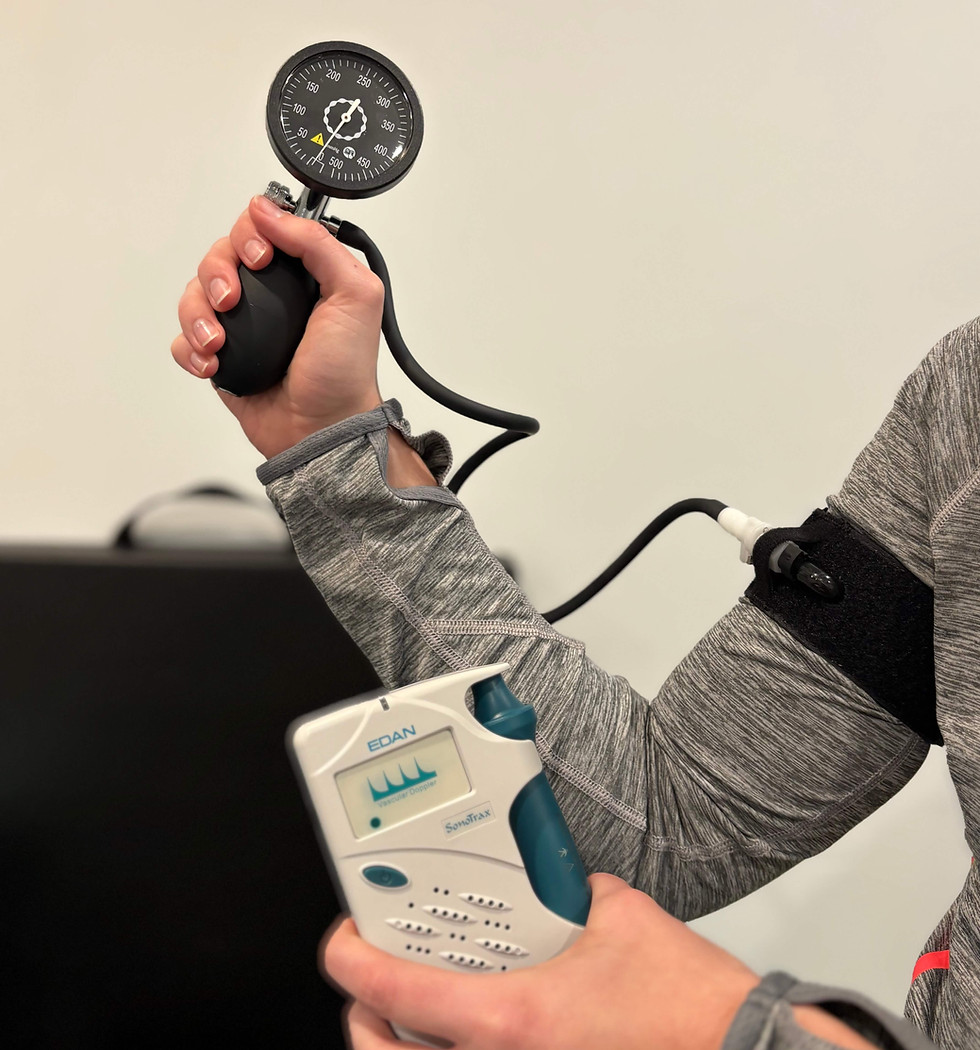
BFR uses a specialized cuff to gently restrict blood flow to a limb while you perform low-load exercises. This creates a strong muscle-building effect without heavy lifting.
Yes — when applied by a trained professional. We use medical-grade cuffs, calibrated pressures, and monitor you throughout the session. Your comfort and safety are always top priority.
Absolutely! Research consistently shows that low-load BFR (around 20-40% of your 1RM) can produce strength and hypertrophy benefits similar to traditional heavy lifting — making it ideal during periods when you can't load heavily.
No, that's the cool part! While the cuffed limb gets the greatest benefit, BFR has been shown to create global or systemic effects, improving strength in other muscle groups as well.
People recovering from injury or surgery, individuals with pain-limited strength, athletes during deload phases, or anyone needing a safe way to maintain or rebuild muscle.
BFR may not be appropriate for people with:
-
Vascular compromise
-
Clotting disorders
-
Uncontrolled hypertension
-
Certain post-surgical restrictions
If you're unsure, we'll help determine whether it's safe for you — and coordinate with your doctor if needed.
-
You'll feel tightness from the cuff and a strong muscle "pump," but it should never be painful. Most clients describe it as challenging but very manageable — and the results speak for themselves.
Most sessions are integrated into your physiotherapy appointment and include a combination of BFR work, targeted exercises, adn recovery-focused treatment.
For many people, yes. Because BFR stimulates muscle growth and activation without heavy loads, it allows meaningful progress earlier in the rehab process.
About Blood Flow Restriction (BFR) Training
Blood Flow Restriction (BFR) training is a modern, research-backed method that helps you build strength, maintain muscle, and recover faster — all while using very light loads.
A comfortable, calibrated cuff is placed on the arm or leg to gently reduce blood flow during simple exercises, creating a powerful stimulus for muscle growth.
What to Expect
-
Each BFR session is guided by a trained physiotherapist who sets and monitors cuff pressure and ensures proper form and safety.
-
We use light loads — typically 20-40% of your one-rep max (1RM) — combined with higher repetitions.
-
Exercises may be weight-bearing or non-weight-bearing, depending on your injury, comfort, and stage of healing.
-
Your program is tailored to your goals, current phase of recovery, and physical tolerance.
We Guide You Through the Process
During each session, we help you with:
-
Selecting the right exercises
-
Adjusting cuff pressure for your safety and comfort
-
Using light loads with higher-repetitions
-
Applying BFR to both weight-bearing and non-weight-bearing movements
Your program is tailored to your goals, your healing stage, and what your body can safely tolerate.
Did You Know...?
One of the most interesting aspects of BFR is that although we can target specific muscles with our exercise selection, the benefits aren't limited to the area under the cuff.
Research shows global effects — for example, training the right quad with BFR can improve strength in the left quad and other lower-body muscles, even without applying a cuff to those areas. The cuffed limb receives the greatest anabolic boost, but the entire system benefits.
Why Does This Matter?
Your muscles respond as if you're lifting something heavy, even when the weight is only 20-40% of your one-rep max. This makes BFR a highly effective option for anyone who needs results without stressing joints, tendons, or healing tissues.